Creating a professional website is one of the smartest investments a small business can make. Whether you’re launching a new company or upgrading your online presence, understanding the cost of a small business website in the UK helps you plan your budget and avoid unexpected expenses.
The price of a website varies depending on the features, design, and level of customization you need. A simple brochure website costs much less than a fully functional eCommerce store with advanced integrations.
In this guide, we’ll break down the average costs of building and maintaining a small business website in the UK, the factors that affect pricing, and tips to help you get the best value for your investment.
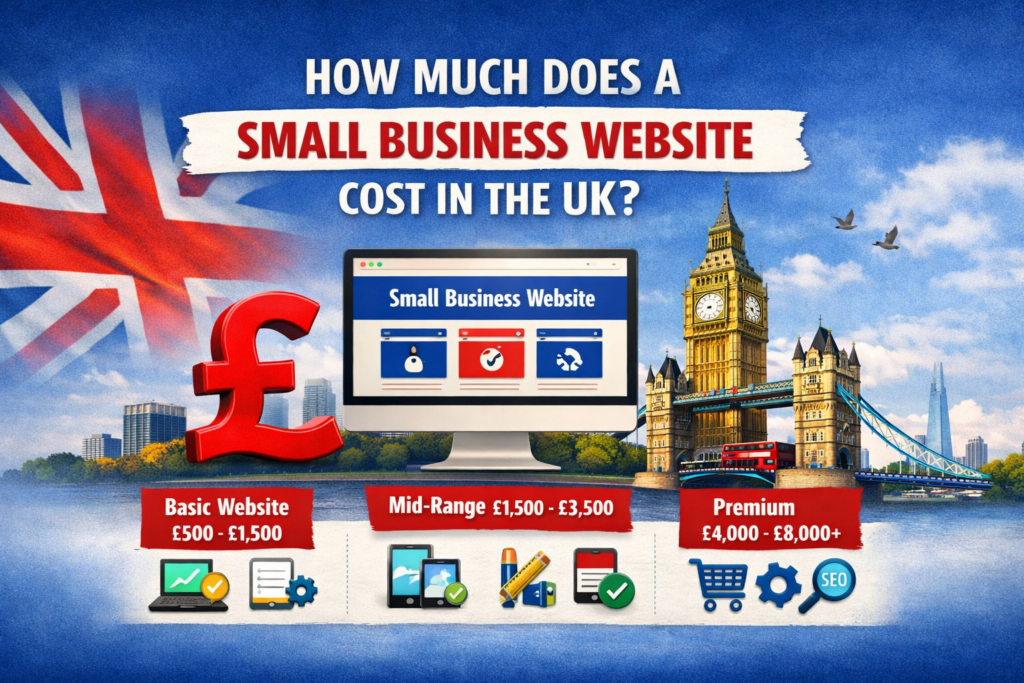
Average Cost of a Small Business Website in the UK
The cost of a website can range from a few hundred pounds to several thousand.
Here’s a general estimate:
| Website Type | Estimated Cost |
|---|---|
| DIY Website Builder | £100–£500 |
| WordPress Website | £500–£2,500 |
| Custom Business Website | £2,000–£10,000+ |
| eCommerce Website | £2,000–£15,000+ |
The final cost depends on your business goals, design preferences, and technical requirements.
Factors That Affect Website Costs
1. Domain Name
Every website needs a domain name.
Typical UK domain prices:
- .co.uk: £5–£15 per year
- .com: £10–£25 per year
Premium domain names can cost hundreds or even thousands of pounds.
2. Website Hosting
Hosting is where your website lives online.
Typical hosting costs include:
- Shared Hosting: £5–£15/month
- Managed WordPress Hosting: £20–£60/month
- VPS Hosting: £30–£150/month
Businesses expecting high traffic may require more powerful hosting.
3. Website Design
Design has a major impact on pricing.
Options include:
- Free templates
- Premium WordPress themes (£30–£100)
- Custom-designed websites (£1,000–£5,000+)
A custom design creates a unique brand identity and improves user experience.
4. Website Development
Development costs depend on the site’s complexity.
Basic websites may include:
- Home page
- About page
- Services
- Contact page
- Blog
Advanced websites may include:
- Customer portals
- Booking systems
- Membership features
- API integrations
- Custom dashboards
The more custom functionality required, the higher the development cost.
WordPress Website Costs
WordPress remains one of the most affordable platforms for UK businesses.
Typical WordPress expenses include:
- Domain
- Hosting
- Premium theme
- Essential plugins
- Design customization
- Security setup
- Speed optimization
- SEO setup
Most small businesses spend between £500 and £2,500 for a professionally built WordPress website.
eCommerce Website Costs
If you plan to sell products online, expect additional expenses.
These may include:
- Shopping cart functionality
- Payment gateway integration
- Product management
- Inventory systems
- Shipping configuration
- Security certificates
- Customer accounts
A professional UK eCommerce website generally costs between £2,000 and £15,000, depending on size and features.
Ongoing Website Costs
Building the website is only the beginning.
Annual expenses often include:
| Service | Typical Annual Cost |
| Domain Renewal | £10–£25 |
| Hosting | £60–£720 |
| SSL Certificate | Free–£100 |
| Website Maintenance | £200–£1,000 |
| Plugin Licenses | £50–£500 |
| SEO Services | £300–£3,000+ |
Regular maintenance helps keep your website secure, fast, and up to date.
Should You Build It Yourself or Hire a Professional?
DIY Website
Pros:
- Lower upfront cost
- Quick setup
- Easy to manage
Cons:
- Limited customization
- Generic appearance
- Learning curve
- May not scale well
Hiring a Professional
Pros:
- Custom design
- Better SEO structure
- Faster performance
- Improved security
- Professional branding
- Ongoing support
Cons:
- Higher initial investment
For businesses that rely on online leads or sales, hiring an experienced web designer often delivers better long-term value.
Hidden Website Costs to Consider
Many businesses forget to budget for additional services, such as:
- Professional copywriting
- Stock images
- Logo design
- Email hosting
- Premium plugins
- Website backups
- Security monitoring
- Performance optimization
Planning for these costs helps avoid surprises later.
How to Save Money on Your Website
You don’t always need the most expensive solution.
Here are a few ways to reduce costs:
- Start with a small website and expand later.
- Use WordPress for flexibility and affordability.
- Choose reliable hosting instead of the cheapest option.
- Invest in quality SEO from the beginning.
- Keep your website updated to avoid costly repairs.
A well-planned website can generate leads and revenue for years, making it one of the best investments for a growing business.
Why WordPress Is a Popular Choice for UK Small Businesses
WordPress powers millions of websites worldwide because it offers:
- Affordable setup costs
- Excellent SEO capabilities
- Thousands of themes and plugins
- Easy content management
- Strong security options
- Scalability as your business grows
Whether you’re a local service provider, consultant, restaurant, or retailer, WordPress provides a cost-effective solution for building a professional online presence.
Conclusion
So, how much does a small business website cost in the UK? The answer depends on your goals and requirements.
A basic website can cost as little as £500, while a fully customized business website or online store may cost £10,000 or more. In addition to the initial build, remember to budget for ongoing expenses such as hosting, maintenance, security, and SEO.
Rather than focusing only on the lowest price, consider the long-term value a high-quality website can deliver. A professionally designed website can improve your credibility, attract more customers, and support your business growth for years to come.
Frequently Asked Questions (FAQs)
How much should a small business expect to pay for a website in the UK?
Most small businesses spend between £500 and £2,500 for a professional WordPress website, while custom websites can cost significantly more.
Is WordPress cheaper than a custom-built website?
Yes. WordPress is generally more affordable because it offers ready-made themes, plugins, and flexible customization without requiring everything to be built from scratch.
Are there monthly costs after launching a website?
Yes. Ongoing costs typically include hosting, domain renewal, maintenance, security, plugin licenses, and optional SEO services.
How long does it take to build a small business website?
A simple business website can take 2–4 weeks, while larger custom or eCommerce websites may take 6–12 weeks or longer, depending on the project’s complexity.
Is investing in a professional website worth it?
Absolutely. A professional website enhances your brand, builds customer trust, improves search engine visibility, and helps generate leads and sales, making it a valuable long-term investment.