Introduction
A business website is more than an online brochure. It is often the first place potential customers go to learn about your company, evaluate your services, and decide whether they should contact you.
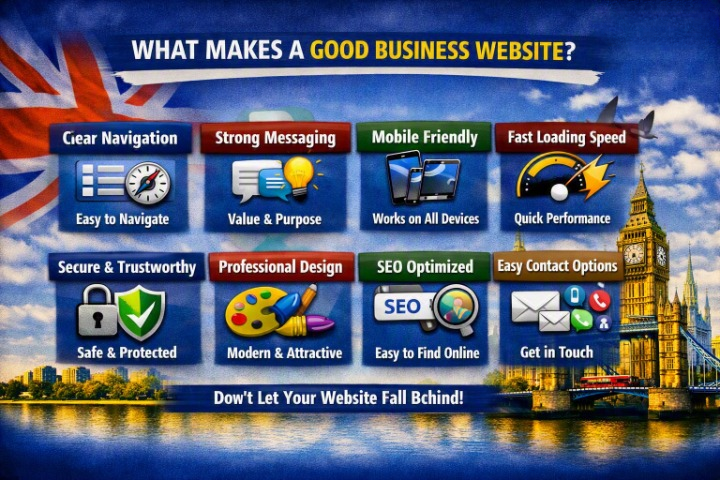
A good business website should look professional, load quickly, work well on mobile devices, provide useful information, and make it easy for visitors to take action.
Whether you’re building a new website or improving an existing one, understanding what makes a good business website can help you attract more visitors, build trust, and generate more leads.
In this guide, we’ll explore the essential features of a successful business website.
1. Clear and Professional Design
Your website should create a strong first impression.
A professional design should include:
- Consistent branding
- Easy-to-read typography
- High-quality images
- Balanced layouts
- Clear navigation
- Consistent colours
Avoid overcrowding pages with too many animations, graphics, or unnecessary elements.
The goal is to make your website look professional while keeping the focus on your customers and business.
2. Clear Business Messaging
Visitors should understand what your business does within a few seconds of landing on your homepage.
Your homepage should clearly communicate:
- What you offer
- Who you help
- Why customers should choose you
- What visitors should do next
For example, instead of a vague headline like “Welcome to Our Website,” use a clear message explaining your service and its value.
Clear messaging helps visitors decide quickly whether your business is relevant to them.
3. Mobile-Friendly Design
A large percentage of website visitors use smartphones.
Your website should work properly across:
- Smartphones
- Tablets
- Laptops
- Desktop computers
Check that:
- Text is readable
- Buttons are easy to tap
- Images resize correctly
- Navigation works smoothly
- Forms are easy to complete
A responsive website provides a better experience and helps your business avoid losing mobile customers.
4. Fast Loading Speed
Nobody wants to wait for a slow website.
Slow pages can frustrate visitors and increase the likelihood that they leave before contacting your business.
Improve performance by:
- Compressing images
- Using modern image formats
- Enabling caching
- Choosing reliable hosting
- Reducing unnecessary scripts
- Optimizing CSS and JavaScript
Website speed should be considered during design and development rather than treated as an afterthought.
5. Easy Navigation
Visitors should be able to find important information quickly.
A simple navigation menu might include:
- Home
- About
- Services
- Portfolio
- Blog
- Contact
Avoid creating complicated menus with too many options.
Good navigation helps both users and search engines understand your website.
6. Strong Calls to Action
A good business website should guide visitors toward the next step.
Examples of calls to action include:
- Get a Free Quote
- Contact Us
- Book a Consultation
- Call Now
- Request a Callback
- Shop Now
Place relevant CTAs throughout important pages rather than relying only on the contact page.
7. High-Quality Content
Your website content should answer the questions your potential customers are asking.
Important content can include:
- Service descriptions
- Product information
- Pricing details
- FAQs
- Customer testimonials
- Case studies
- Helpful blog articles
Avoid writing content solely for search engines. Focus on providing genuinely useful information to your target audience.
8. Trust Signals
Customers need reasons to trust your business before contacting or buying from you.
Useful trust signals include:
- Customer reviews
- Testimonials
- Case studies
- Industry certifications
- Awards
- Client logos
- Secure payment options
- Clear contact information
For local businesses, displaying a real business address and phone number can also help establish credibility.
9. Search Engine Optimization
A good website should be easy for search engines to discover and understand.
Important SEO elements include:
- Keyword-focused content
- Descriptive page titles
- Meta descriptions
- SEO-friendly URLs
- Internal links
- Optimized images
- Logical heading structure
- XML sitemap
- Structured data where appropriate
SEO should be considered when planning the website structure, not added only after the website is launched.
10. Simple Contact Options
Don’t make potential customers search for a way to contact you.
Your website should provide convenient options such as:
- Contact form
- Phone number
- Email address
- Online booking
- Live chat
- Social media links
For mobile visitors, a clickable phone number can make contacting your business much easier.
11. Strong About Page
An About page gives customers an opportunity to learn about the people behind your business.
Consider including:
- Company story
- Experience
- Team members
- Values
- Mission
- Qualifications
A good About page can make your business feel more authentic and trustworthy.
12. Dedicated Service or Product Pages
Don’t put every service on one crowded page.
Create dedicated pages for important services or product categories.
For example, a web design agency might have separate pages for:
- Website Design
- WordPress Development
- Ecommerce Development
- Website Redesign
- Website Maintenance
Dedicated pages make information easier to find and can create additional opportunities to target relevant search queries.
13. Secure Website
Security is essential for every business website.
Make sure your website uses:
- HTTPS
- An SSL certificate
- Strong passwords
- Updated software
- Regular backups
- Security monitoring
If your website collects personal information or processes payments, security becomes even more important.
14. Good User Experience
User experience should be considered throughout the website.
Visitors should be able to:
- Find your website
- Understand your offer
- Find the information they need
- Trust your business
- Take action
Remove unnecessary obstacles from this journey.
The simpler the experience, the easier it is for visitors to become customers.
15. Accessible Design
A good website should be usable by as many people as possible.
Consider:
- Readable font sizes
- Good colour contrast
- Keyboard navigation
- Descriptive image text
- Clear form labels
- Logical heading structure
- Accessible buttons and links
Accessibility isn’t only about compliance—it also creates a better experience for all visitors.
16. Analytics and Conversion Tracking
You need to know whether your website is actually working.
Track metrics such as:
- Website traffic
- Traffic sources
- Popular pages
- Form submissions
- Phone calls
- Purchases
- Conversion rates
Analytics can show you which parts of your website are performing well and where improvements are needed.
17. Regular Updates and Maintenance
Launching a website isn’t the end of the process.
Regularly update:
- Business information
- Services
- Products
- Blog content
- Images
- Software
- Plugins
- Security systems
A well-maintained website stays secure, accurate, and useful.
What Makes a Good Business Website? Quick Checklist
Before launching your website, make sure it has:
- Professional design
- Clear messaging
- Mobile-responsive layout
- Fast loading speed
- Simple navigation
- Clear calls to action
- High-quality content
- Customer reviews or testimonials
- SEO-friendly structure
- Easy contact options
- Strong About page
- Dedicated service pages
- HTTPS security
- Good user experience
- Accessible design
- Analytics and conversion tracking
- Regular maintenance
Common Business Website Mistakes
Even attractive websites can fail to generate results.
Avoid:
- Unclear homepage messaging
- Slow loading pages
- Poor mobile design
- Complicated navigation
- Weak calls to action
- Outdated content
- Too much technical jargon
- Missing contact information
- Poor-quality images
- Ignoring SEO
- Not tracking conversions
A website should always be designed around the needs and expectations of its target customers.
Final Thoughts
So, what makes a good business website?
A successful business website combines professional design, clear messaging, fast performance, mobile responsiveness, useful content, strong SEO, simple navigation, trust signals, and effective calls to action.
Most importantly, your website should have a clear purpose. Whether that purpose is generating leads, selling products, booking appointments, or building brand awareness, every page should help visitors move toward that goal.
Your website doesn’t need to be complicated to be effective. A simple, fast, trustworthy, and user-friendly website can often outperform a visually impressive website that is difficult to navigate or unclear about what the business offers.
Frequently Asked Questions
What are the most important features of a business website?
The most important features include responsive design, fast loading speed, clear messaging, simple navigation, strong calls to action, useful content, SEO optimization, security, and easy contact options.
What should a business website include?
Most business websites should include a homepage, About page, service or product pages, contact page, clear calls to action, trust signals, and relevant supporting content such as FAQs or a blog.
How can I make my business website look professional?
Use consistent branding, high-quality images, readable typography, clean layouts, simple navigation, and plenty of whitespace. Avoid unnecessary animations and clutter.
Does website design affect business growth?
Yes. A well-designed website can improve user experience, build trust, increase engagement, generate leads, and make it easier for customers to purchase products or contact your business.
How often should a business website be updated?
Review your website regularly and update information whenever your business changes. Major design or technology improvements may be needed every few years, depending on the website’s performance and business requirements.
How much does a good business website cost in the UK?
The cost varies based on the website’s size, functionality, design, and development requirements. A simple small-business website may cost a few thousand pounds, while ecommerce and highly customized websites can cost considerably more.