
Building a website is an exciting step for any business, but one of the most common questions is, “How long does it take to build a website?” The answer depends on the size, complexity, and features of the project. While some websites can be completed in just a few days, others may take several months to design, develop, and launch.
In this guide, we’ll explore the typical website development timeline, the factors that affect it, and how you can speed up the process.
Average Website Development Timeline
Here is a general estimate of how long different types of websites usually take to build:
| Website Type | Estimated Timeline |
|---|---|
| Landing Page | 1–3 days |
| Basic Business Website | 2–4 weeks |
| Small Business Website (5–10 pages) | 3–6 weeks |
| WordPress Website | 2–6 weeks |
| eCommerce Website | 6–12 weeks |
| Custom Web Application | 3–6 months or longer |
These timelines may vary depending on the project’s scope and client feedback.
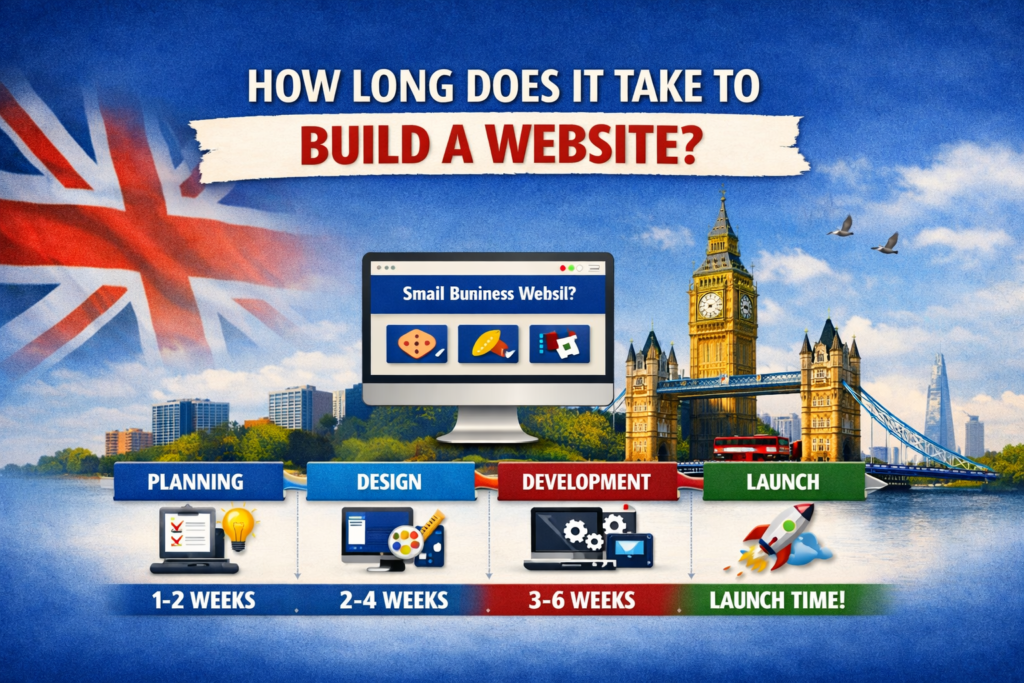
Stages of Website Development
1. Planning and Discovery (2–7 Days)
Every successful website starts with careful planning. During this stage, you’ll define your goals, target audience, required features, and overall project scope.
Typical tasks include:
- Identifying business objectives
- Creating a sitemap
- Planning website structure
- Gathering content and branding materials
Good planning helps avoid delays later in the project.
2. Website Design (1–3 Weeks)
The design phase focuses on creating a visually appealing and user-friendly interface that reflects your brand.
This stage often includes:
- Wireframes
- Page layouts
- Color schemes
- Typography
- Mobile-responsive design
- User experience (UX) improvements
Design revisions may extend the timeline depending on client feedback.
3. Website Development (2–6 Weeks)
Once the design is approved, developers begin building the website.
Common development tasks include:
- Installing WordPress or another CMS
- Creating page layouts
- Adding functionality
- Contact forms
- Blog setup
- SEO-friendly URLs
- Mobile optimization
- Speed optimization
More advanced features such as booking systems, membership areas, or custom integrations require additional development time.
4. Content Integration (3–10 Days)
A website needs high-quality content before it can go live.
This stage involves:
- Adding text
- Uploading images
- Publishing blog posts
- Creating service pages
- Optimizing content for SEO
If content isn’t ready, the project timeline may be delayed.
5. Testing and Quality Assurance (3–7 Days)
Before launch, every website should be thoroughly tested to ensure everything works correctly.
Testing includes:
- Mobile responsiveness
- Browser compatibility
- Contact forms
- Page speed
- Broken links
- Security checks
- SEO basics
Fixing issues before launch creates a better user experience.
6. Website Launch (1–2 Days)
After testing is complete, the website is deployed to the live server.
Launch tasks include:
- Connecting the domain
- Configuring hosting
- Installing SSL certificates
- Final performance checks
- Search engine indexing
Once everything is verified, your website becomes available to the public.
Factors That Affect Website Development Time
Several factors can influence how quickly a website is completed:
Website Size
A five-page website can be built much faster than a website with dozens of pages.
Custom Design
Fully custom designs take longer than using pre-built templates.
Features and Functionality
Advanced functionality such as:
- Online booking
- eCommerce
- Membership systems
- Customer dashboards
- API integrations
requires additional development time.
Content Availability
Projects often slow down when text, images, or branding materials are provided late.
Client Feedback
Fast approvals and clear communication help keep projects on schedule.
How to Speed Up Website Development
You can reduce your project timeline by following these tips:
- Prepare your content before the project begins.
- Choose a reliable web designer or agency.
- Respond quickly to design approvals.
- Clearly define your goals from the start.
- Avoid adding new features midway through development.
Good planning and communication can save weeks of unnecessary delays.
How Long Does a WordPress Website Take?
WordPress is one of the fastest platforms for building professional websites.
Typical timelines include:
- Basic portfolio website: 1–2 weeks
- Small business website: 2–4 weeks
- Large WordPress website: 4–8 weeks
- WooCommerce store: 6–12 weeks
Using premium themes and plugins can significantly reduce development time compared to building everything from scratch.
Is a Faster Website Build Always Better?
Not necessarily.
While it’s tempting to launch as quickly as possible, rushing the process can lead to:
- Poor design
- Slow performance
- Security issues
- SEO mistakes
- Bugs and broken functionality
A well-planned website that is thoroughly tested will provide a better experience for visitors and deliver stronger long-term results.
Conclusion
The time it takes to build a website depends on your project’s size, complexity, and requirements. A simple business website may be ready in 2–4 weeks, while a custom website or eCommerce store can take 6–12 weeks or more.
By planning ahead, preparing your content, and working closely with an experienced web developer, you can keep your project on schedule and launch a high-quality website that supports your business goals.
Frequently Asked Questions (FAQs)
How long does it take to build a simple business website?
Most simple business websites take 2 to 4 weeks from planning to launch.
Can a website be built in one week?
Yes, a basic landing page or small website with ready-made content and a template can often be completed within a week.
Why do custom websites take longer?
Custom websites require unique designs, advanced functionality, extensive testing, and often multiple rounds of revisions, increasing the development timeline.
Does content affect website development time?
Yes. Delays in providing text, images, logos, or other assets are one of the most common reasons website projects take longer than expected.
How can I launch my website faster?
Prepare your content in advance, define your requirements clearly, respond promptly to feedback requests, and avoid major changes once development has started.