Introduction
Your website is often the first impression potential customers have of your business. While a website may have looked modern and performed well when it was first launched, technology, design trends, and customer expectations change over time.
If your website is outdated, slow, difficult to navigate, or failing to generate leads, it may be time for a redesign. A well-planned website redesign can improve user experience, strengthen your brand, boost search engine rankings, and increase conversions.
In this article, we’ll explore the most common signs that your business needs a website redesign and how updating your site can help you achieve better results.
Why Website Redesign Matters
A website redesign isn’t just about making your site look better. It also improves:
- User experience (UX)
- Website speed
- Mobile responsiveness
- Search engine optimization (SEO)
- Security
- Accessibility
- Lead generation
- Brand credibility
An updated website helps visitors trust your business and encourages them to take action.
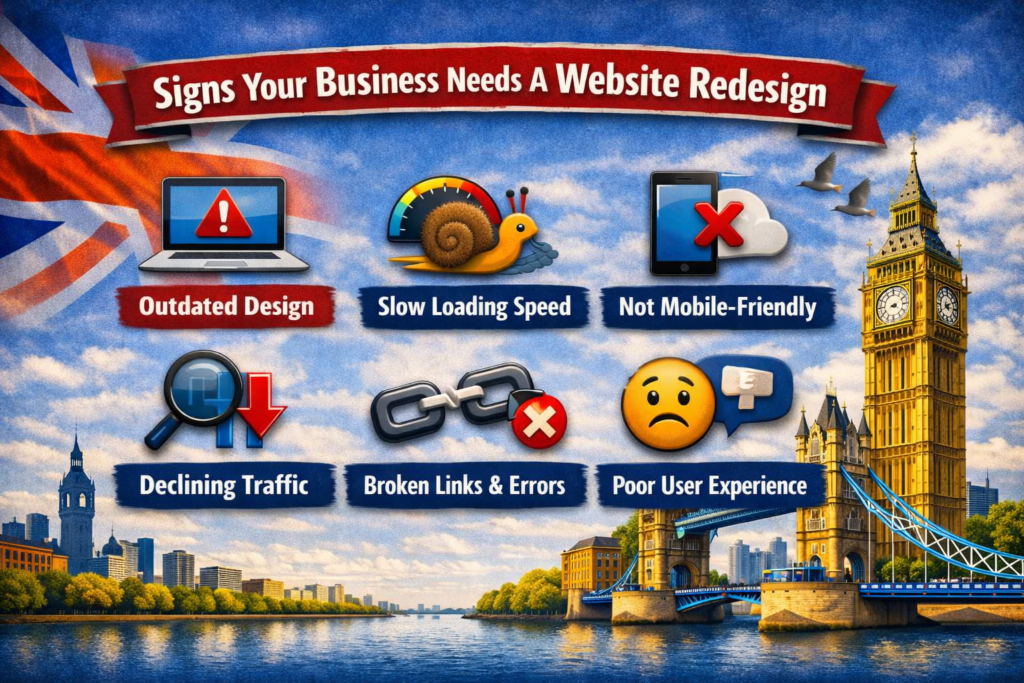
1. Your Website Looks Outdated
Web design trends evolve every few years. If your website still looks like it was built many years ago, visitors may assume your business is outdated as well.
Common signs include:
- Old-fashioned layouts
- Low-quality images
- Small fonts
- Cluttered pages
- Poor color combinations
A modern, professional design creates a stronger first impression and builds customer confidence.
2. Your Website Isn’t Mobile-Friendly
More than half of all web traffic now comes from mobile devices. If your website doesn’t work well on smartphones or tablets, you’re likely losing potential customers.
Problems include:
- Tiny text
- Buttons that are hard to tap
- Images that don’t resize properly
- Horizontal scrolling
- Slow mobile performance
A responsive redesign ensures your website works seamlessly across all screen sizes.
3. Your Website Loads Slowly
Website speed has a direct impact on user experience and SEO.
Slow websites often experience:
- Higher bounce rates
- Lower search rankings
- Fewer conversions
- Poor customer satisfaction
Common causes include:
- Large image files
- Outdated code
- Too many plugins
- Poor hosting
- Unoptimized scripts
A redesign provides an opportunity to improve speed and performance.
4. You’re Not Getting Enough Leads
If visitors aren’t contacting you, requesting quotes, or making purchases, your website may not be guiding users toward the right actions.
A redesign can improve:
- Call-to-action buttons
- Contact forms
- Landing pages
- Navigation
- Trust signals
- Conversion funnels
Better user journeys often lead to higher conversion rates.
5. Your Brand Has Changed
Businesses evolve over time.
Perhaps you’ve updated your:
- Logo
- Brand colors
- Services
- Target audience
- Company messaging
If your website no longer reflects your current brand identity, it can create confusion and reduce trust.
A redesign helps maintain a consistent brand experience.
6. Your Website Is Difficult to Navigate
Visitors should find information quickly.
Warning signs include:
- Confusing menus
- Too many navigation options
- Broken internal links
- Poor page organization
- Missing search functionality
Simple, intuitive navigation keeps users engaged and improves conversions.
7. Your Website Isn’t Ranking Well on Google
Poor search engine performance can indicate outdated website architecture or SEO issues.
Potential problems include:
- Slow loading speed
- Poor mobile experience
- Missing metadata
- Weak internal linking
- Duplicate content
- Technical SEO errors
A redesign allows you to build SEO best practices into your website from the ground up.
8. High Bounce Rate
If visitors leave your website within seconds, something may be driving them away.
Possible reasons include:
- Slow loading pages
- Unclear messaging
- Outdated design
- Poor navigation
- Irrelevant content
Analyzing user behavior can help identify where improvements are needed.
9. Your Competitors Have Better Websites
Compare your website with others in your industry.
Ask yourself:
- Do competitor websites look more professional?
- Are they easier to use?
- Do they load faster?
- Do they provide a better user experience?
A redesign helps your business stay competitive in today’s digital marketplace.
10. Your Website Is Hard to Update
If making simple changes requires a developer every time, your website may be built on outdated technology.
Modern content management systems make it much easier to:
- Publish blog posts
- Update services
- Change images
- Add new pages
- Edit content
A redesign can simplify website management and reduce maintenance costs.
11. Your Website Has Security Issues
Older websites often become vulnerable to cyber threats.
Signs include:
- Outdated software
- Expired SSL certificate
- Frequent malware infections
- Unsupported plugins
- Weak security settings
A redesign gives you the opportunity to improve website security and protect customer data.
12. Your Content Is Outdated
Visitors expect accurate and up-to-date information.
Review your website for:
- Old pricing
- Discontinued services
- Expired promotions
- Broken links
- Outdated team information
- Old blog articles
Refreshing your content during a redesign improves credibility and SEO.
Benefits of a Website Redesign
A successful redesign can deliver several long-term benefits, including:
- Faster loading speeds
- Better user experience
- Improved mobile responsiveness
- Stronger search engine rankings
- Higher conversion rates
- Better accessibility
- Enhanced security
- Improved brand image
- Easier website management
When done strategically, a redesign supports both customer satisfaction and business growth.
When Should You Redesign Your Website?
While there’s no fixed timeline, many businesses consider a redesign every 2 to 4 years or sooner if major issues arise.
You should also consider a redesign if:
- Your business has expanded
- You offer new products or services
- Your branding has changed
- Customer expectations have evolved
- Website technology has become outdated
Regular reviews help ensure your website continues to meet business goals.
Website Redesign Checklist
Before starting a redesign, make sure to:
- Audit your current website
- Review analytics and user behavior
- Identify SEO issues
- Improve website speed
- Update branding
- Create clear calls to action
- Optimize for mobile devices
- Test across multiple browsers
- Strengthen website security
- Refresh outdated content
A structured approach reduces the risk of losing traffic or functionality during the redesign process.
Final Thoughts
Your website should be more than just an online brochure—it should actively support your marketing, generate leads, and provide an excellent experience for visitors.
If your site looks outdated, performs poorly, struggles to rank in search results, or no longer reflects your business, these are strong signs it’s time for a website redesign.
Investing in a modern, fast, secure, and user-friendly website can improve customer trust, increase conversions, and position your business for long-term success.
Frequently Asked Questions (FAQs)
How often should a business redesign its website?
Most businesses benefit from reviewing and refreshing their website every 2–4 years, depending on industry trends, technology updates, and business growth.
Will a website redesign improve SEO?
Yes. A properly planned redesign can improve page speed, mobile responsiveness, site structure, and technical SEO, all of which contribute to better search engine rankings.
Can I redesign my website without losing SEO?
Yes. By preserving important URLs where possible, using proper redirects, and maintaining optimized content, you can redesign your website while protecting your search visibility.
How long does a website redesign take?
The timeline depends on the size and complexity of the project. A small business website may take a few weeks, while larger or more customized websites can take several months.
Is a website redesign worth the investment?
For businesses with outdated, slow, or underperforming websites, a redesign can lead to improved user experience, higher search rankings, increased leads, and better long-term return on investment.